Citation generator
Build your bibliography with the citation generator.
Choose a style and source type. Enter the details from your source, then generate and copy the citation.
Optional details and access date
Citations use English wording. Harvard follows Cite Them Right; check your required style.
Reference
APA 7In-text citation
Source details
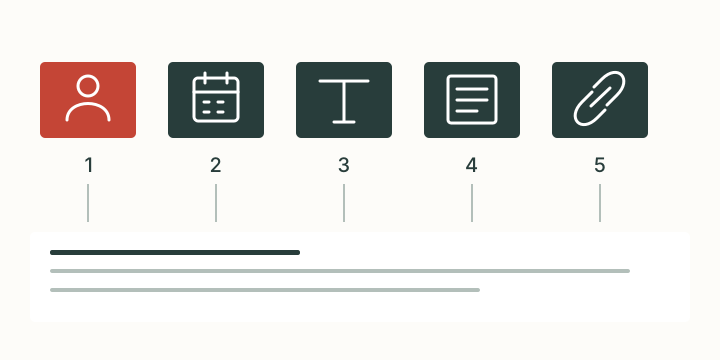
Shows which source details you have entered.
Review against the source before submitting.
Copy the reference into your reference list and the citation into your text. Add the source to your bibliography to keep it.
How to choose a citation styleBibliography
Bibliography changes are saved only in this browser when storage is available. Export a JSON project before clearing browser data.
Title, DOI or ISBN search matches only your saved or imported sources. Remote autocite is unavailable; enter facts manually or import a local JSON/RIS file.
Up to 2 MB and 100 sources. Import adds records; it does not contact a publisher or overwrite the existing bibliography.Enter in a field: generate citation. Ctrl/⌘ + Enter: save source. Escape: clear form.
Formatting: citeproc-js and bundled CSL styles. Source code and license notes are included.
Enter your source in the citation generator
Need a reference for a book, article or webpage? Enter its title, credited authors and publication year in the citation generator. Choose the style your assignment requires. I check the source type first: a journal article and a whole book need different details. The publication name, URL, DOI, full date and cited page are in the main form. Open Optional details and access date for additional fields. Choose Generate citation to review the result; Enter in a text field also generates it. The reference and matching citation update as you type.
The practice example is deliberately illustrative. Replace its title, author and website with facts from your own source, or clear the form and start empty. Add to bibliography saves the current record; editing a saved card updates that record rather than adding another copy. The form is cleared after a save, while the bibliography remains. Changing the style reformats the saved sources together, so you can compare systems without retyping your author names and titles.
Choose the source type and publication
The tool supports webpages, books, journal articles, videos, news articles, blog posts, podcast episodes, social posts and reports. The type matters because a standalone work and a smaller work inside a larger publication are not treated identically. A journal article has an article title and a journal container; an episode has its own title and a show name. I check that these two fields have not been swapped before concentrating on punctuation.
| Source | Title identifies | Container or publisher | Useful extra facts |
|---|---|---|---|
| Webpage | The page you read | Website name | Publication and relevant access dates; URL |
| Book | The whole book | Publisher | Edition; publication year; ISBN for local lookup |
| Journal article | The article | Journal name | Volume, issue, complete page range and DOI |
| Video or podcast | The video or episode | Platform or show | Credited creator, publication date and URL |
| News, blog or social post | The article or post text | Publication or platform | Credited author, date and direct URL |
| Report | The report | Producing organization | Report number, publication year and URL |
Keep individual and group authors distinct
Enter individual authors in the order credited on the source. Given names and family names are separate so the style can initialize or invert them appropriately. Multiple given names remain available; reducing Alex Morgan to a single initial would discard information before the formatter even begins. Add another author when needed. Use Group author for an organization and enter its complete literal name. Do not divide an agency name into a first name and surname.
An empty author list is a real state, not an invitation to invent “Author unknown.” APA can move a title into the author position when nobody is credited. A website owner is not automatically the author of every page on that website. I look for the page’s actual credit and distinguish it from the site name. The Purdue OWL author guidance explains individual, group and missing-author cases, including how longer APA reference lists handle their author names.
A missing date is not the day you found the page
A publication year and a complete publication date are different levels of information. Enter only what the source supports. If you know the year but not the day, use Publication year and leave the complete date empty. A full date uses YYYY-MM-DD, and the tool rejects impossible calendar dates or a year that contradicts the supplied full date. It treats date components as calendar values instead of converting midnight through your browser’s time zone.
Access date describes when you consulted a source; it does not fill the publication-date field. Enter it when the selected style and source need it, using your actual consultation date. An undated Chicago webpage receives a specific reminder to inspect this field. The source-anatomy panel keeps an absent publication date visible even when a style can format a usable draft without it. I avoid filling gaps with today’s date or a guessed year just to make every ribbon look complete.
Four choices, with Chicago notes kept separate
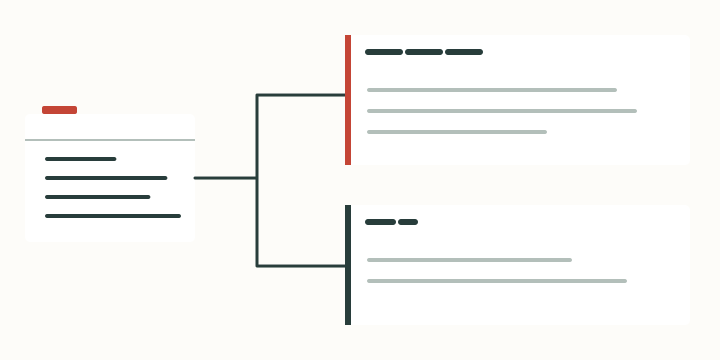
APA and the selected Harvard convention use author–date citations. MLA usually identifies the author and a cited location without repeating a publication year in the in-text citation. Chicago here is the notes-and-bibliography system: the secondary result is a full note, while the large reference card is a bibliography entry. Copying one in place of the other can change author order, punctuation and the way a cited page is presented. The output labels make that distinction explicit. Social posts omitted from the selected Chicago bibliography remain visible as labeled note-only sources, and text/HTML exports put them in a separate section.
Harvard is a family of conventions, not one universally fixed punctuation rule. This tool bundles Cite Them Right, and you should compare it with the variant required by your course or publisher. The MLA format index and Chicago’s official note and bibliography examples are useful cross-checks. The selected citation styles use English citation wording even when the surrounding interface is translated. Inspect title capitalization, acronyms and names in other languages before submission.
Keep the article’s range and your cited page apart
Source page range records the extent of a work, such as all pages of a journal article. Cited page / locator identifies the passage used in your own writing. An article can span pages 45–67 while the passage you cite is on page 50. The bibliography should retain the article’s full range, and the in-text citation or note should point to the cited location. Changing the locator must not silently narrow the whole article’s description.
A DOI can be entered as its bare identifier, with a DOI label or as a doi.org URL; it is normalized before formatting. A source URL must be a full HTTP(S) address without embedded credentials. Neither field causes the tool to visit the destination or verify its availability. ISBN checks validate the identifier’s checksum for local catalog lookup, not the existence or edition of a book. Keep identifiers attached to the exact work rather than treating their presence as a quality badge.
The reference rules behind the draft
I use a bundled Citation Style Language processor rather than separate punctuation templates for every source. APA and MLA, Chicago notes and bibliography, and Harvard Cite Them Right remain distinct styles. The processor keeps sources with the same author and year distinguishable when it formats a bibliography together. Inspect the matching citation after saving or changing a record: its letter suffix can change when another work enters the list.
These controls exercise author counts, identifiers and invalid input. ISBN-13 alternates weights 1 and 3; its weighted total must be divisible by 10. ISBN-10 uses weights 10 down to 1, with X worth 10; its total must be divisible by 11. These checks detect a malformed identifier, not a fabricated source.
| Input | Expected result |
|---|---|
| Mary Ann Reed | Reed, M. A. in APA |
| 20 credited authors | All 20 names in the APA reference |
| 21 credited authors | First 19 + final author: 20 names, with an ellipsis |
| ISBN-13: 9780140449136 | Weighted total 110; remainder 0 when divided by 10 |
| ISBN-10: 039304002X | Weighted total 154; remainder 0 when divided by 11 |
| Publication year: 0, −23 or 10000 | Rejected; a blank year stays missing |
For an APA social post, the formatted title uses its first 20 words; the complete text remains editable in the saved record. A journal article spanning pages 45–67 covers 67 − 45 + 1 = 23 pages. A cited locator of 50 points to one passage without replacing that full range. Neither the checks nor the five metadata groups measure how persuasive the source is.
A bibliography you can move without an account
Bibliography changes are stored in this browser when local storage is available. Clear form leaves those saved sources alone. Deleting one source, selected sources or the whole bibliography offers Undo until the next change to the bibliography. Alphabetical order follows the selected style’s bibliography sorting; Input order displays the records in the order you added them. An annotation stays attached to its record and is included in the relevant exports.
Copy and plain-text export give you readable text, while HTML export retains italics and a hanging-indent layout. BibTeX export carries the source metadata for a compatible reference workflow. JSON project export preserves the editable fields and is the practical transfer or backup format. JSON and supported RIS imports add records locally instead of replacing the existing bibliography. The limits are 100 sources and 50 authors per source; an import file must be at most 2 MB.
Search your catalog and inspect the final draft
Title, DOI and ISBN search looks only inside saved or imported records. It does not perform remote autocite, fetch a publisher record or inspect a webpage. That boundary keeps your source details local and makes the lookup’s scope clear. If a record is absent, enter its facts manually or import a supported local file. Check imported author order, source type, title and container against the original: an exchange format can transport a mistake as easily as a correct value.
I finish by comparing every formatted reference with the work, checking its matching citation or note and then inspecting the exported document. A correct-looking reference does not prove that a source is trustworthy or that you have represented its argument fairly. Read the missing-author APA guide when credits or dates are absent, and the citation-system guide when the assignment’s style choice is unclear. Compare the final reference with the original source before submitting.
For the webpage fields, follow the website citation walkthrough.
Questions and answers
Does the tool find sources on the web?
No. Title, DOI and ISBN search matches only saved or imported local records. Enter source facts manually or import a supported JSON/RIS file.
Which Harvard style is included?
Cite Them Right is the bundled Harvard convention. Compare it with your institution’s required variant before submitting.
What does Chicago produce?
The large card is a bibliography entry. The secondary result is a full note from Chicago’s notes-and-bibliography system.
Can I recover a deleted bibliography?
Undo restores the deletion until the next bibliography change. Export a JSON project to keep an editable copy beyond browser storage.
Does a filled metadata ribbon prove a correct citation?
No. The ribbons show supplied facts, not verified authorship, source quality or compliance with every assignment rule.
Guides
 APA references with missing authors: use the facts you haveSeparate missing credits from group authors, and keep absent dates honest.
 Citation styles: match the reference to the writing systemCompare the jobs of a reference, a compact citation and a full note.
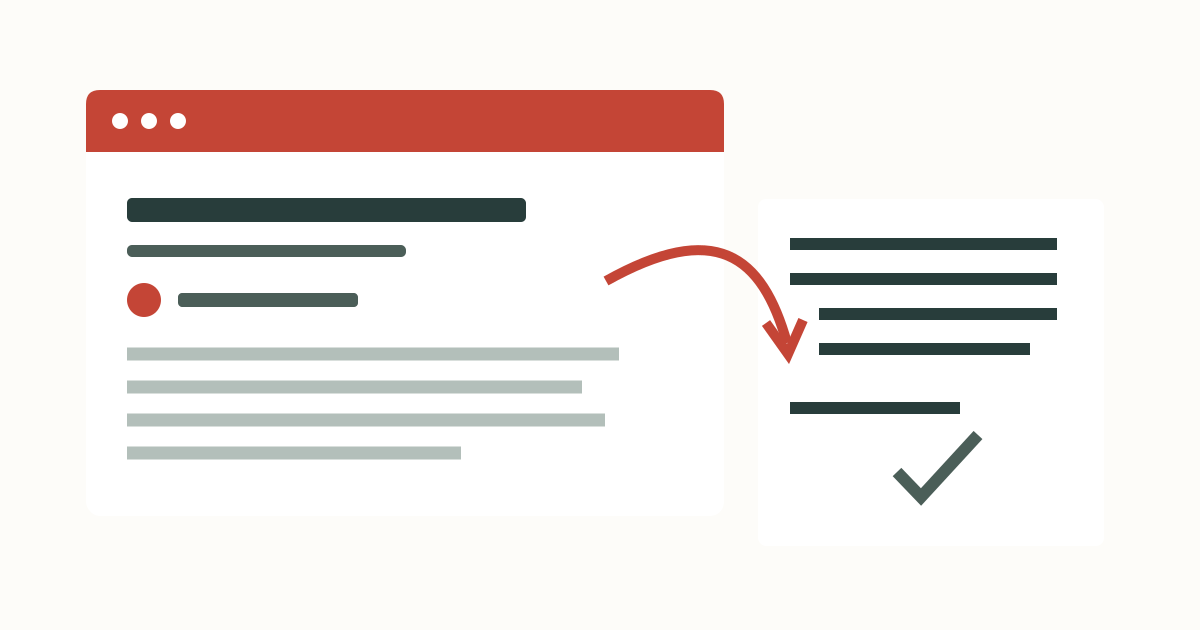 How to cite a website: source details and clear examplesCollect webpage details, handle absent dates and copy the right citation.