APA references with missing authors: use the facts you have
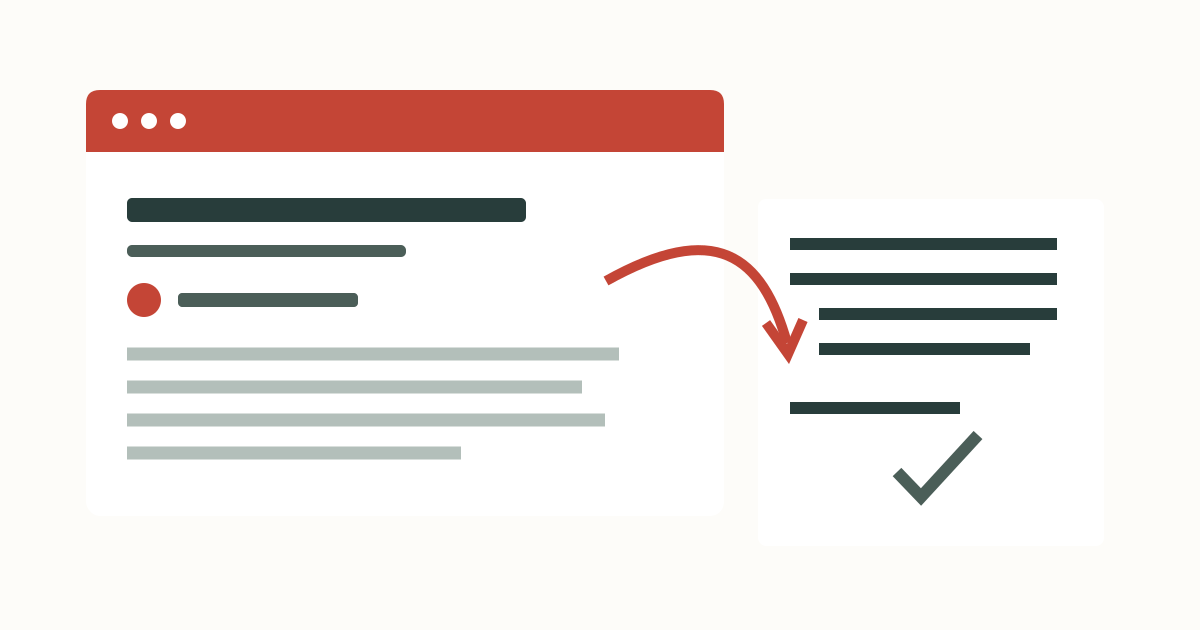
No byline on the page you need to cite? APA references start with the title when no author is credited. I check for a named person or organization first; the website owner is not automatically the author.
Read the credit before naming an author
I look at the title area, the end of the work and any explicit byline. An author credit can name a person or an organization. The site’s masthead, a navigation logo and a copyright notice may identify the publisher or owner without establishing who wrote this particular work. If a page clearly attributes the work to an agency, use that agency as a group author. If it provides no credit, leave the author list empty instead of borrowing a nearby name.
A source may also identify an editor, translator or uploader. Those roles need care rather than an automatic assumption that all named people are authors. The available source types in the citation generator cover common coursework references, not every specialized contribution pattern. If a work needs additional roles that the form cannot represent, consult the required guide and adjust the final reference in your document. A visible limitation is more useful than a polished reference built from the wrong role.
Start APA references with the title when authors are absent
For an APA reference with no credited author, the title moves to the beginning. I do not enter Author unknown, Anonymous or the name of the hosting site merely to occupy the first field. Anonymous is appropriate only when the work actually uses that credit. The Purdue OWL reference-author guidance distinguishes missing authors from group authors and explicitly addresses this title-first arrangement.
The corresponding in-text citation needs to lead readers to the same reference-list entry. With no author, a title or shortened title can serve that purpose; its treatment depends on the type of work. Do not replace it with a generic word such as Source. In Citation Generator, leave authors empty, enter the real title and inspect both outputs. Check that the citation points to the work’s identifying words, not to an unrelated website label or a title invented from a browser tab.
| What the work says | What to enter | What to avoid |
|---|---|---|
| A named individual | Given names and family name | Reducing several given names to one initial before formatting |
| A named organization | Group author with its complete literal name | Splitting an agency into first and last names |
| No credited author | An empty author list and the real title | Invented “Author unknown,” a guessed owner or an unsigned “Anonymous” |
Complete APA examples with missing information
The following records are practice data, not real publications. The first names no author or publication date and identifies Sample Press as the publisher. The second credits Sample Library as a group author and names the same organization as publisher. Both have the title Reading sources. The absent date stays absent; it is not replaced with the day you opened the book or report.
| Record | Reference | In-text citation |
|---|---|---|
| Book: no author, no date; publisher Sample Press | Reading sources. (n.d.). Sample Press. | (Reading Sources, n.d.) |
| Report: group author Sample Library, no date; publisher also Sample Library | Sample Library. (n.d.). Reading sources. | (Sample Library, n.d.) |
Notice the change at the beginning of each reference. The book starts with its title; the report starts with the credited organization. The report does not repeat Sample Library as publisher. The Purdue OWL report examples distinguish an organization’s own report from one credited to individual authors. In each row, the in-text citation uses the same identifying element as the full reference. I check this connection before checking punctuation: a reader must be able to follow the citation to the right entry. These examples cover an entire book or report. For a direct quotation, add the actual cited page in the tool’s separate locator field; do not invent a page when the source has none.
Treat an organization as a literal name
A group author is not a workaround for a missing person. It is an authorship credit in its own right. Enter the organization’s name as one literal value. Initializing the words of an agency as if they were a person’s given names can leave the reference looking plausible while making its identity unrecognizable. Preserve the source’s actual organizational wording and check whether a parent agency is instead the publisher.
When the credited group and the publisher are the same, a style may suppress a repeated publisher name. That can be correct rather than a missing-data bug. Distinguish repetition rules from absent metadata by inspecting the source and the formatted draft together. I keep a short list of source details: who is credited, what the work is called, where it appeared and what identifier leads to it. The source-details panel is a reminder of those groups, not a replacement for this inventory.
Keep a publication date separate from an access date
A missing publication date is another independent gap. The standard APA missing-date notation is n.d.; it does not mean that the work was published on the day you read it. If the source provides only a year, keep that year without inventing a month or day. If it provides a complete publication date, enter that date in the relevant field. Citation Generator checks calendar validity and rejects contradictory year and full-date values.
An access date records your consultation, and its relevance depends on the kind of source and the required style. It must not be moved into Publication date simply to eliminate a warning. A formatted reference can contain a missing-author arrangement and a missing-date notation at the same time. I review those decisions separately: title position handles the lack of a credited author; date notation handles the lack of publication timing. Neither tells me whether the source is suitable for the argument.
Review the reference and its matching citation together
After formatting, compare the first element of the reference with the text used in the in-text citation. Then read the title, source name and identifier against the original work. The tool’s practice metadata are illustrative, so they must be replaced rather than copied into a real bibliography. If title capitalization changes with a style, inspect proper nouns and acronyms yourself. A formatting rule cannot reliably reconstruct a name that was entered incorrectly.
I also check the exported document. Plain text cannot retain an italic title, while HTML export can preserve italics and a hanging-indent layout. Importing that output into another editor can change spacing or styling again. Save an editable JSON project before clearing browser data, and retain enough information to return to the source. The citation-system guide explains why a bibliography entry, a parenthetical citation and a full note serve different places in a document. Missing information should remain an honest limitation throughout that transfer, remain clear in the exported document.
For a webpage, follow the website citation steps to collect the page title, credit and direct address before formatting.
Questions and answers
Should I write Anonymous when a source has no author?
Only if the source actually credits Anonymous. Otherwise leave the author list blank and start the APA reference with the title.
Is the website owner always the group author?
No. A site logo or copyright notice does not establish the author of a specific page. Use an organization as author only when the work credits it.
Can an access date replace a missing publication date?
No. Publication and access dates describe different events. Leave the publication date absent and use the required missing-date notation.